HRV & ADHD Executive Function
HRV Biofeedback for ADHD: What the Research Shows
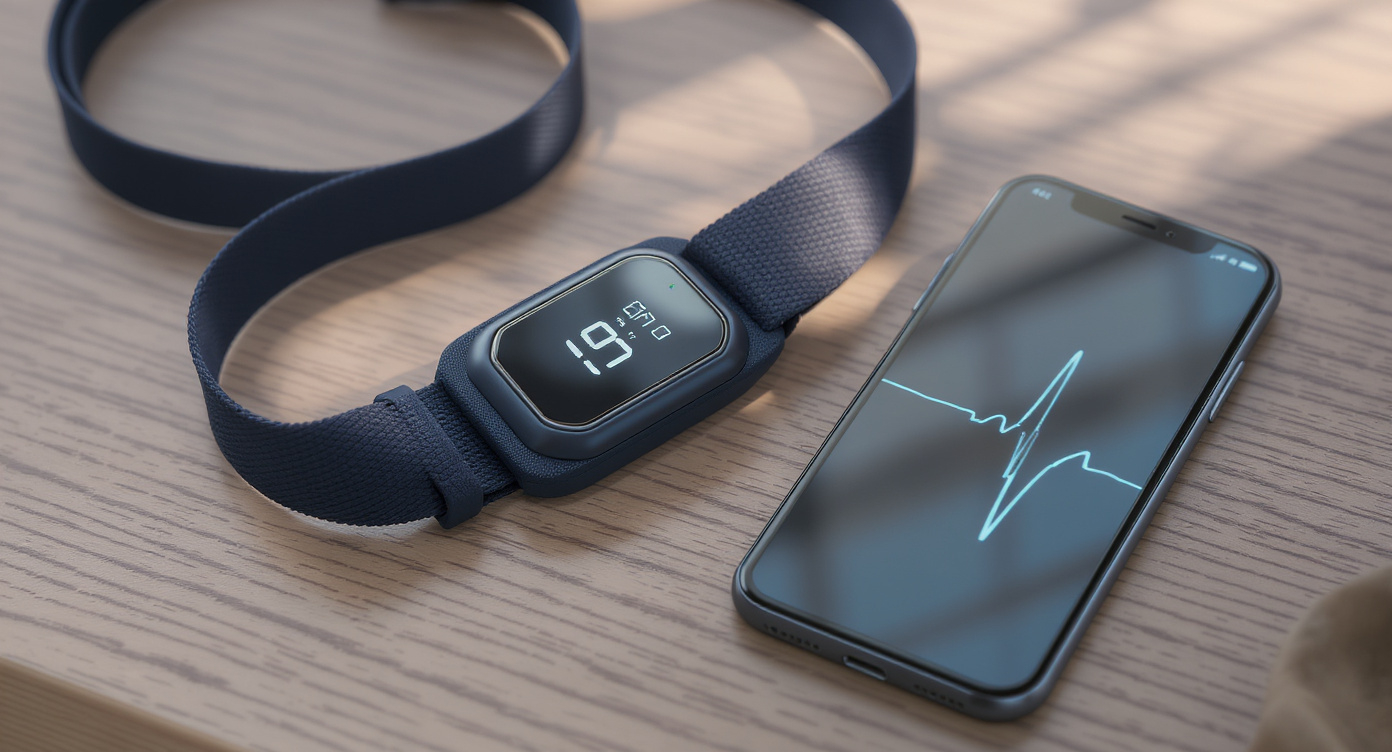
What HRV biofeedback does
HRV biofeedback is a training protocol that uses real-time heart rate data to guide breathing at the individual resonance frequency — the rate that maximally amplifies HRV. By sustaining high-amplitude HRV oscillations during repeated sessions, the protocol produces lasting increases in resting vagal tone.
Increased vagal tone strengthens the prefrontal-vagal inhibitory pathway. Thayer and Lane (2000) established in their neurovisceral integration model that the prefrontal cortex inhibits subcortical threat responses specifically via vagal output pathways — meaning that increasing vagal tone through biofeedback directly trains the same circuit that is chronically under-activated in ADHD. The biofeedback does not train behavior directly; it trains the neurological substrate that makes behavior regulation possible.
The clinical evidence in ADHD
Multiple randomized controlled trials and meta-analyses have examined HRV biofeedback in ADHD populations. Thayer and colleagues (2012), synthesizing neuroimaging data across more than 70 studies, found that higher HRV consistently correlates with greater prefrontal cortex activation — providing the neural basis for the attention and impulse control improvements observed clinically. The most consistent findings:
- Sustained attention: The most reliably improved domain. Continuous performance test (CPT) scores show consistent improvement across studies. Effect sizes are moderate (d = 0.4–0.7) and comparable to behavioral interventions.
- Response inhibition: Stop-signal task performance and commission error rates improve significantly. This reflects the vagal-prefrontal inhibitory pathway — the same function that is impaired in ADHD impulse control.
- Emotional regulation: Parent and teacher ratings of emotional dysregulation improve in pediatric studies. Adult studies show reduced emotional reactivity. This is consistent with the vagal regulation of amygdala response.
- Cortisol profile: Post-protocol salivary cortisol measures show flattened diurnal amplitude — an indicator of normalized HPA axis function. This represents a direct reduction in one of the primary allostatic load biomarkers.
The protocol
Standard clinical HRV biofeedback protocols for ADHD involve 10-20 sessions of 20-30 minutes. The first session identifies the individual resonance frequency (typically near 0.1 Hz but varies ±15% across individuals). Subsequent sessions use this personalized frequency for paced breathing with real-time HRV feedback displayed as a visual waveform or score.
Home practice between clinical sessions — resonance breathing without real-time feedback — produces additional training benefit and is required for durable outcomes. The protocol is typically delivered over 4-6 weeks.
- Session structure: 5 minutes baseline HRV measurement, 20 minutes paced breathing at resonance frequency with real-time feedback, 5 minutes post-session measurement.
- Home practice: 10-15 minutes daily resonance breathing, ideally at the same time each day. Morning practice (before stimulant medication) provides the clearest HRV signal and highest training utility.
- Consumer hardware options: HeartMath Inner Balance Sensor (validated, ear clip design, paired app provides coherence feedback), Polar H10 + Elite HRV app, or Muse headband (EEG-based but includes some HRV features).
Biofeedback vs. unguided resonance breathing
Research comparing guided HRV biofeedback (with real-time feedback hardware) to unguided resonance breathing (paced breathing without feedback) shows similar outcomes for most individuals. The feedback accelerates learning to maintain the correct breathing rate and provides objective confirmation of resonance, but it is not necessary for the underlying physiological adaptation.
For ADHD populations, the engagement provided by real-time visual feedback may support session completion and consistency — which is the primary implementation challenge. Whether the additional engagement value outweighs the cost and complexity of hardware depends on individual initiation barriers.
Full topic guide
HRV & ADHD Executive Function
HRV Biofeedback for ADHD: What the Research Shows — frequently asked questions
Is HRV biofeedback a replacement for ADHD medication?
No. HRV biofeedback is an adjunctive intervention — it improves the biological substrate (vagal tone and prefrontal inhibitory capacity) but does not address the full neurotransmitter profile of ADHD. The most complete evidence is for HRV biofeedback as a complement to other interventions (medication, behavioral strategies) rather than as a standalone treatment.
What equipment do I need for HRV biofeedback?
Formal HRV biofeedback uses a pulse sensor (ear clip or finger sensor) connected to software that shows real-time HRV feedback and guides breathing pace. Consumer-grade options include the Inner Balance Sensor (HeartMath) and the Polar H10 chest strap with compatible apps. Without specialized equipment, resonance breathing (paced breathing at 6 breaths per minute without real-time feedback) produces similar training effects in research comparisons.
How many sessions does HRV biofeedback require?
Standard research protocols use 10-20 sessions of 20-30 minutes each, typically 3-4 times per week. Measurable behavioral improvements in attention and impulse control are typically reported after 6-8 sessions in ADHD populations. Durable HRV baseline improvement requires the full protocol and consistent practice maintenance afterward.
Does HRV biofeedback improve attention specifically?
Yes. The most consistent effects in ADHD studies are on sustained attention and impulse control — the executive functions most directly tied to prefrontal inhibitory capacity. Working memory improvements are reported but less consistent. Effects on hyperactivity are smaller. The mechanism is vagal strengthening increasing prefrontal tone — the same circuit that medication targets via dopamine.
HolosCognitive
Cognitive scaffolding that reads your capacity first
HolosCognitive adapts task demand in real time based on HRV, sleep debt, and somatic indicators. It does not demand willpower. It reduces the activation threshold.
Start free trial